Tiny House on Wheels vs. Tiny House on a Foundation: I've Lived in Both
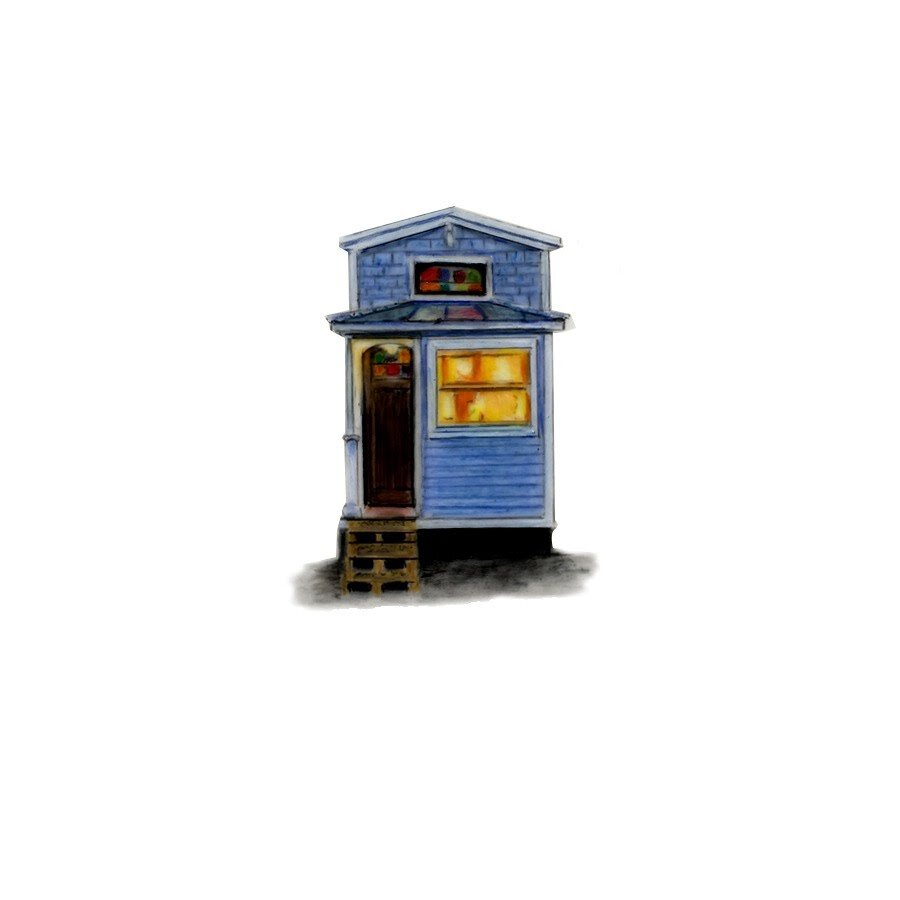
Most tiny house content online is written by people who have lived in one kind of tiny house. I have lived in both, on the same piece of land, a few steps apart. Tiffany is a 270 square foot tiny house on wheels. Stanley is an octagonal tiny house on a foundation that we built on Shellmate Island after years in Tiffany. Both are now vacation rentals in Sarasota, Florida, and guests ask me the same question all the time: which one would you build again?
The honest answer is that it depends on what you are actually trying to do, and most people have not thought that part through yet. So here is the comparison I wish I had read before buying Tiffany, from someone who has paid both sets of bills.

The short version
A tiny house on wheels is a vehicle that you live in. A tiny house on a foundation is a house that happens to be small. That one sentence explains almost every difference below: how you finance it, insure it, permit it, design it, and what happens to its value over time.
If you want flexibility and a lower entry price, and you are comfortable living in a legal gray area in a lot of places, wheels win. If you want a permanent home that banks, insurers, and the county all understand, and you want to design a space without a trailer dictating the shape, a foundation wins.
Design: the trailer decides a lot for you
This was the biggest surprise for me when we started designing Stanley. A tiny house on wheels has to fit on a road. That means roughly 8 feet wide before you are an oversized load, around 13.5 feet tall to clear bridges, and a weight your trailer axles can carry. Tiffany weighs about 15,000 pounds. Every design decision in a tiny house on wheels starts from those limits, which is why almost all of them are long rectangles with a loft.

A foundation removes all of that. Stanley is an octagon. There is no loft, the bedroom is on the main floor, the ceiling opens up in the middle, and the whole thing feels dramatically bigger than Tiffany even though the square footage is not that different. My mom can sit in Stanley and not feel claustrophobic, which is a real benchmark in my family. I wrote about why we went with a Deltec prefab shell if you want the long version.

The trade-off is that a foundation locks you into the land. Tiffany can leave. Stanley cannot.

Legal: this is where most people get burned
A tiny house on wheels is usually titled as an RV or a trailer. That makes it easy to buy and move, but it also means most places do not consider it a legal full-time residence. We spent our early years in Tiffany in an RV park and then on borrowed land, and the question of where you are allowed to park and live in a tiny house on wheels is the single most common problem I hear about from readers. I covered what I learned in Is It Legal to Live in a Tiny House in Florida?.
A tiny house on a foundation goes through the normal building permit process. In Sarasota County that meant plan review, zoning, utilities, flood zone, and resource protection reviews, and it meant building to the full Florida building code. That is more paperwork, more cost, and more time. It is also permanent. Once Stanley passed inspection, nobody could ever tell us to move it. I broke down the whole thing in my permit review process guide and in 5 things I learned building on a foundation.
One detail that matters in Florida: new construction on a foundation needs impact-rated windows. Ours cost roughly three times what the upgraded windows on Tiffany cost. Code compliance is not free, but it is also what makes the house a house.
Hurricanes: I have done both the hard way
When Hurricane Irma came through, Tiffany was a 15,000 pound box on wheels with 17 windows and nowhere to go. No storage unit would take her, nobody would tow her out of state, and the mobile home anchors were sold out everywhere. We ended up welding D-rings onto the frame and strapping her down. She made it, but I would not describe that week as relaxing. The full story is in Tiffany the Tiny Home vs Hurricane Irma.
Stanley was designed for this from the start. Deltec builds round and octagonal homes specifically for high wind, and the shell is engineered well past what a tiny house on wheels will ever see. Several storm seasons later, that decision has paid for itself in sleep alone.
If you are building in a hurricane state, this should weigh heavily. Wheels give you the theoretical option to leave. In practice, when a storm is six days out, everyone with a big truck has their own problems.

Money: cheaper to start, harder to finance
A tiny house on wheels is almost always cheaper to get into. You can buy a used one, you do not need to own land, and you do not pay for a foundation, septic, well, or utility hookups. But financing is awkward. Most banks will not write a mortgage on a vehicle, so you are looking at RV loans, personal loans, or cash. I covered the options in Financing a Tiny House.
A tiny house on a foundation costs more up front, and I will tell you from experience to budget a third over whatever your quotes say. Every single one of ours came in about a third over, down to a science. In exchange, it is real property. It can be mortgaged, it can be insured like a normal house, it builds equity with the land, and it can be sold with the land. Tiffany, like any vehicle, depreciates. Stanley, like any house, has not.
Insurance follows the same split. Insuring a house on wheels takes real effort and a specialty policy. A house on a foundation is just a house to an insurer. More on that in Tiny House Insurance in Florida.
Daily life: the stuff nobody puts in the spreadsheet
Living in both, here is what actually felt different day to day.
Stairs and lofts. Tiffany has a loft with real stairs, which I still think is the right call for a tiny house on wheels. But not having a loft at all in Stanley is a different level of easy. No climbing at 2 a.m., no ducking, no heat pooling up top in August.
Plumbing. On wheels you are managing hookups, hoses, and tanks, and you think about water in a way you never do in a house. On a foundation it is just plumbing. Tiffany currently runs a composting toilet for guests, which works great and which I wrote a whole FAQ about.
Weather and movement. A house on wheels moves. Wind rocks it, you feel people walking, and you learn where the creaks are. A foundation is silent. Guests who stay in both back to back always mention this.
Utilities. Closer than you would think. Both run on mini-splits and both are small enough that the bill is a rounding error compared to a normal house. I track it in what I actually pay each month.

So which one would I build again?
If I were starting over with no land and no money, I would buy a tiny house on wheels again, because it got me into the lifestyle years before I could have afforded to build. Tiffany was the right first move.
If I already owned land, I would build on a foundation every time. The design freedom, the legal certainty, the hurricane rating, and the fact that it is an asset instead of a depreciating vehicle add up to a better long-term home.
The best path I know of, and the one I accidentally took, is both: start on wheels, learn what you actually want, then build.
Try both before you decide
This is the part where it helps to be a host. Tiffany and Stanley are both bookable, on the same island, so you can stay in a tiny house on wheels and a tiny house on a foundation back to back and feel the difference yourself instead of reading about it. You can book Tiffany The Tiny Home and Stanley on Shellmate Island directly through Sunshine State Rentals. I wrote more about why that is worth doing in Should You Rent a Tiny House Before You Buy One?
Come stay in both. Then go build the right one.