How to Prepare a Tiny House for a Hurricane (What Irma Taught Me)
Updated October 2026. I started this post back in September 2017, right after Hurricane Irma chased us out of Florida. I've rewritten it as the checklist I wish I'd had back then.
If you live in a tiny house in Florida, or you're thinking about it, hurricane prep isn't optional. Season runs June 1 through November 30, and the storms that hit late can be just as nasty as the early ones.
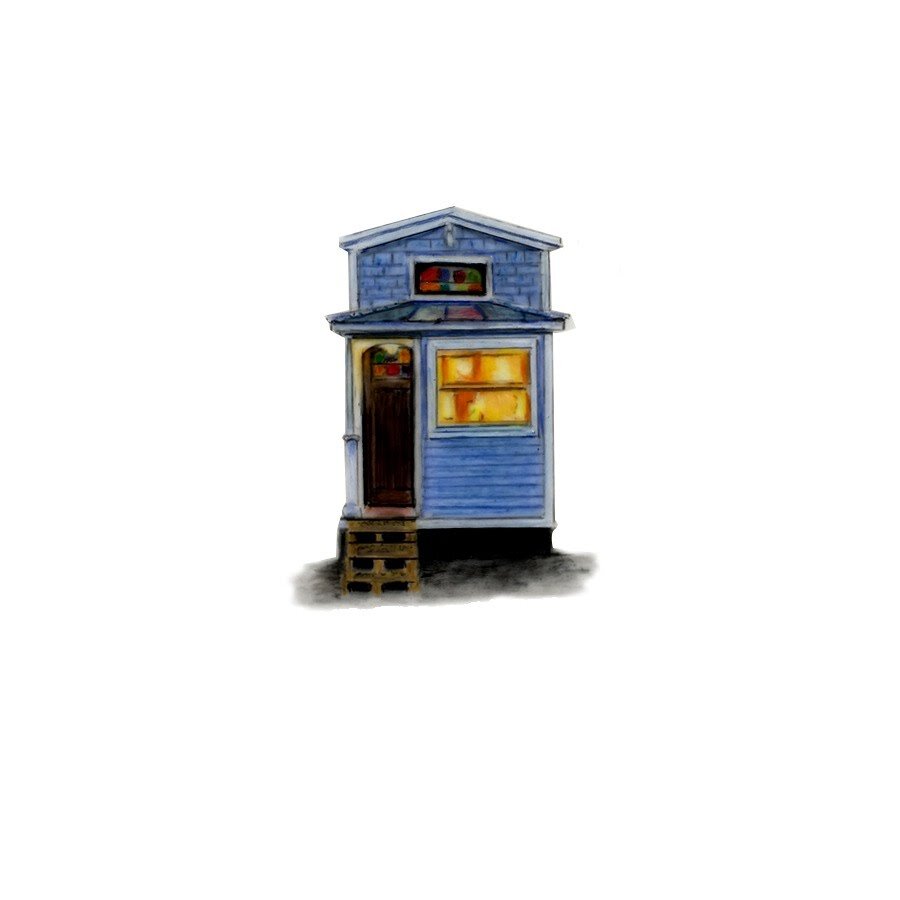
I learned this the hard way. When Irma was heading our way in 2017, I was out of state, Tiffany was sitting on her trailer, and I figured she was already set up for hurricane weather. She wasn't. (You can read the play-by-play in Tiffany the Tiny Home vs Hurricane Irma.) This post is the useful version: what to do, and when, so you're not scrambling like I was.

The Big Lesson: Prep Before the Cone Shows Up
Here's the timeline that taught me everything. Irma was six days out when I first heard about it. That sounds like a lot of time. It isn't.
- Towing: Tiffany weighs about 15,000 pounds, which takes a bigger truck than I had. I found people willing to tow her, but nobody wanted to haul her out of state because they were busy prepping their own lives.
- Indoor storage: I called storage units, boat warehouses, and friends with big buildings. Every option was either full, not tall enough, or nobody wanted the liability.
- D-rings: I assumed she came with tie-down points. She didn't. I had to track down a welder with a portable unit to weld D-rings onto the trailer frame. That ate most of a morning.
- Anchors: By the time I had D-rings, the ground anchors were sold out everywhere I called.
- Plywood: Gone from the stores. The only sheets left were about $50 each from people on Facebook.
Every one of those problems would have been a quiet afternoon errand in May. Five days before landfall, they were impossible. So the number one rule of tiny house hurricane prep: do the hardware stuff before the season starts.
Step 1: Know Your Plan A (Stay, Move, or Leave)
A tiny house on wheels gives you one option a regular house doesn't: you can move it. But be honest about whether you actually can.
- Do you own a truck that can safely tow your home's weight? If not, who will, and have you asked them before a storm?
- Where would it go? Inland, out of state, into a building? Line that up ahead of time. Everyone else is looking for the same thing once a storm is coming.
- If moving isn't realistic, your plan is to secure the house and get yourself out. That's what we ended up doing.
If you've never towed your house before, read my guide to transporting your tiny home. A highway full of evacuation traffic is a bad place to learn.

Step 2: Tie It Down Properly
If your tiny house is on wheels and you're not moving it, it needs to be anchored. Here's the setup I was trying to put together:
- Tie-down points on the trailer frame. Check right now whether your trailer has D-rings or similar anchor points welded to the frame. If it doesn't, get them added by a welder you trust. Don't assume your builder did it. Mine didn't.
- Ground anchors. These are the same kind of earth anchors used for mobile homes and RVs. They get screwed or driven into the ground and have a loop at the top. The right length and type depends on your soil, so ask a local installer.
- Steel cable or straps run from the frame tie-downs to the anchors, tensioned properly.
Buy the anchors and cable in the off-season and install them, or at least keep them on site. Florida has a lot of mobile homes, and when a big storm is coming, those anchors disappear from every store fast.
Also check your roof. Tiffany's roof is rated for 180 mph winds, which gave me some peace of mind. Know what yours is rated for and when it was last inspected.
Step 3: Protect the Windows (and Skip the Myths)
Tiffany has 17 windows. That's great for light and a lot to cover in a hurry.

- Pre-cut plywood or storm panels. Measure every window, cut the panels, label them, and store them flat under the house or in a shed. When a storm is coming, you just screw them in.
- Don't count on tape. We taped our windows because it was the only thing left to do. Tape doesn't stop glass from breaking. Think of it as a last resort, not a plan.
- Clear the yard. Anything that can fly will. We flipped our picnic table, moved outdoor furniture to a safer spot, and parked our Tacoma right next to Tiffany as a windbreak on one side.
Step 4: Pack the Inside Like You're Moving
A tiny house fills up fast when you start taking things off shelves. We boxed things up and stacked them in the tub. Here's how I'd do it now:
- Take everything off open shelves and walls and box it up.
- Put the boxes in the shower or tub. It's the most enclosed spot in the house.
- Unplug electronics and move anything valuable up into the loft in case water gets in.
- Take pictures of everything before you leave, inside and out. You'll want them if you need to file a claim. While you're at it, read up on tiny house insurance in Florida before storm season, not during it.
Step 5: Supplies and an Exit Plan for the People (and Pets)
Your safety comes before the house. My dad's words stuck with me through the whole Irma mess: these things are replaceable. As well built as Tiffany is, she's replaceable. We aren't.
What we stocked:
- Food that doesn't need a fridge: canned goods, tuna packets, protein bars, unsalted nuts (so they don't make you thirsty), and cooking oil for dense calories
- As much water as we could find. We got about 8 gallons, and it took several store runs.
- Baby wipes in case we couldn't shower
- Apps that work without cell service so we could reach family who stayed behind
- Pet food and a carrier for our cat Oliver. (He hated the carrier. Practice with yours ahead of time. More on tiny living with animals in Pets in a Tiny Space.)
And decide when you'll leave before you need to. We went back and forth for hours. In the end my brother got us onto earlier flights out of Orlando, and Sam took Oliver on one flight while I took the next. Have that conversation early, not at 5 a.m. after a night of taping windows.
Wheels vs. Foundation: Storms Changed How I Think About It
Irma stuck with us when we built our second tiny house, and that one sits on a foundation. Stanley is a Deltec, an octagonal home designed with hurricanes in mind. We wrote about that decision in why we chose a Deltec prefab shell.

That doesn't mean a tiny house on wheels is a bad idea in Florida. It means the prep looks different. On wheels, you have mobility and a tie-down job. On a foundation, the structure does more of the work, but you can't drive away. I break down the rest of the tradeoffs in Tiny House on Wheels vs. Tiny House on a Foundation: I've Lived in Both.
Quick Tiny House Hurricane Checklist
Before June 1:
- Confirm tie-down points on the trailer frame
- Buy and install ground anchors and cable
- Cut and label window panels
- Line up a tow and a place to go, or decide you'll secure the house and leave
- Review your insurance
When a storm is forecast:
- Stock water, food, meds, and pet supplies
- Secure or move everything outside
- Box up the inside and store it low
- Photograph everything
- Leave early if you're going to leave
Try Tiny Living (Hurricane Prep Not Included)
If you're tiny-curious, the easiest way to see whether it fits your life is to spend a few nights in one. You can stay in Tiffany The Tiny Home, the HGTV-featured tiny house on wheels from this story, or in Stanley on Shellmate Island, the octagonal Deltec on a foundation. Both sit on our private 1.5-acre island in Sarasota, about three minutes from Siesta Key, with kayaks, bikes, a fire pit, and a screened hammock lounge.

Book a weekend, live in both styles, and see which one you'd want to ride out a Florida summer in.
-Tim